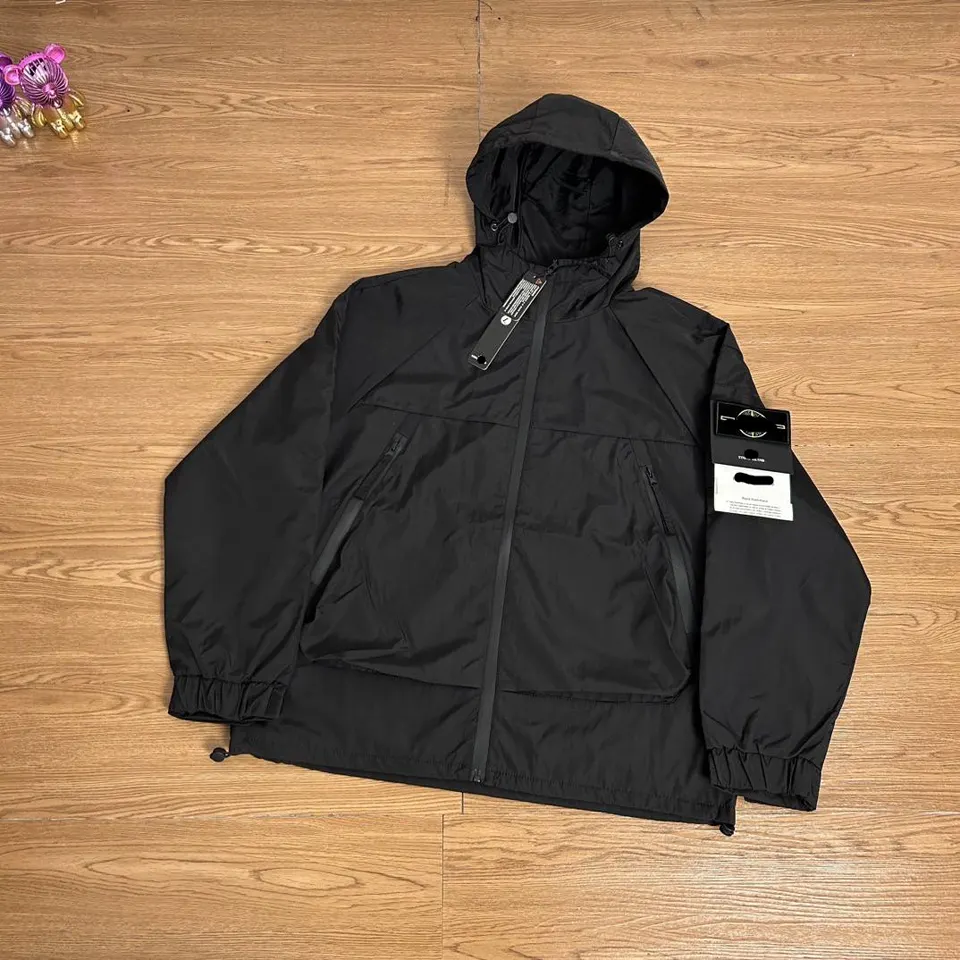
Compare route divisors with the same parcel
For an illustrative box measuring 30 × 20 × 20 cm, volume divided by 6000 gives 2 kg; divided by 5000 it gives 2.4 kg. If actual weight is 1.7 kg and the route charges the greater of actual and volumetric weight, the planning basis is respectively 2 kg or 2.4 kg before route rounding. These are arithmetic examples, not live rate or eligibility claims. Enter the divisor from the actual route in the calculator and check its minimums, rounding and current quote separately.
Two parcels can weigh the same and cost differently
A scale tells you actual weight, but an aircraft, truck, or warehouse also cares about the space a parcel occupies. A dense box of small hardware and a large box of light jackets may register the same kilograms while using very different transport capacity. That is why some Joyagoo routes compare actual weight with a dimensional calculation and charge the higher result.
This is not an extra penalty added after the fact. It is the route's definition of chargeable weight. Buyers get surprised when they total item weights but ignore the final carton. The correct shipping estimate starts with the products and the package that will surround them, then applies the live rule of the route under consideration.
What actual weight includes
Joyagoo defines actual weight as the product plus the packing materials used for it. The final number can include seller packaging, retail boxes that are kept, waterproof wrapping, corner protection, reinforcement, filler, and the outer carton or bag. Stored-item weight may reflect original packaging, while the final parcel reflects the buyer's packing requests and warehouse work.
Removing packaging can reduce actual weight, but the trade-off must be explicit. A shoe box may be heavy and bulky, yet it protects the structure. Reinforcement adds weight but can lower damage risk. The cheapest scale number is not always the cheapest total outcome if poor protection leads to a damaged item that the route does not compensate fully.
How volumetric weight is calculated
The published formula is package length × width × height, measured in centimeters, divided by a carrier or route divisor. The result is a kilogram-equivalent weight. Joyagoo's guidance lists divisors such as 5000, 6000, 7000, and 8000 depending on the third-party logistics standard. A smaller divisor produces a larger volumetric result for the same box.
Never publish or rely on one universal divisor. Joyagoo's route table shows different rules across postal, express, and dedicated lines, and some routes apply volume only after a side-length threshold or when a parcel does not fit a carrier bag. Open the current route detail and check its exact formula, thresholds, units, and rounding before comparing costs.
A worked comparison
Imagine a packed carton measuring 50 × 40 × 30 centimeters and weighing 6 kilograms. Its volume is 60,000 cubic centimeters. With a divisor of 5000, the volumetric result is 12 kilograms. With 6000 it is 10 kilograms; with 8000 it is 7.5 kilograms. On a route that charges the higher value, each of those lines would bill above the 6-kilogram scale weight.
Now reduce the carton to 45 × 35 × 25 centimeters by removing empty seller cartons and arranging soft goods efficiently. The volume becomes 39,375. At a 6000 divisor, the result falls to about 6.56 kilograms. A modest reduction on each side nearly closes the gap with actual weight because all three dimensions multiply. This is why packing shape can matter more than removing a few grams.
Find the volume drivers
Retail shoe boxes, hats, padded jackets, protective cases, and loosely filled seller cartons are common volume drivers. A single rigid item can determine the outer dimensions for every soft item packed around it. Lay out the intended parcel conceptually: which object sets length, which sets width, and which sets height? That question identifies where a packing request can have the largest effect.
Do not compress or remove protection blindly. Vacuum packing can help ordinary soft clothing but may crease structured garments or press hardware into fabric. Removing all boxes may lower cost but increase deformation risk. Separate items into a volume-efficient parcel and a protection-focused parcel when one compromise cannot serve both groups well.
Route thresholds can change the answer
Joyagoo's published weighing table shows that some postal routes use actual weight below a side-length threshold and compare volumetric weight only when a side reaches or exceeds that threshold. Express lines may calculate volume for nearly every parcel. Dedicated lines can use carrier-bag tests, different divisors, or country-specific rules. The parcel's dimensions can therefore change both the calculated number and whether the calculation applies.
A route with a higher per-kilogram price can still be cheaper when its divisor or threshold favors the parcel. Conversely, a low headline rate can become expensive when a bulky carton triggers volume weight. Compare estimated payable cost from the same realistic dimensions rather than comparing rate tables in isolation.
Estimated billing weight is provisional
When stored items are selected, the system estimates packaging and produces an estimated billing weight. If the buyer asks to remove packaging, add reinforcement, or build a particular parcel shape, the finished measurement can differ. Joyagoo explicitly describes the estimate as a reference; the packed parcel is the physical object that matters.
Save the estimated weight and quote, but plan for adjustment. An estimate that changes is not automatically an error. The useful diagnostic is whether the final dimensions, actual weight, route formula, and rounding produce the chargeable figure shown. If they do not, those same records support a precise support request.
The logistics provider may remeasure
After the warehouse packs and measures the parcel, the logistics provider can accept that billing weight or adjust it. Joyagoo's estimated-versus-actual guidance says the provider's measurement controls when an adjustment occurs, and actual billing details can be checked after shipment. Packaging can settle, carrier equipment can round differently, or a dimensional scan can produce a small change.
This is another reason to avoid estimating to the exact cent. Build a range and a decision threshold. Ask whether the parcel remains affordable if the final chargeable weight is one billing step higher. If that small move would change the route choice, rehearsal packing and a conservative buffer become more valuable.
When rehearsal packing earns 20 CNY
Joyagoo lists rehearsal packing at 20 CNY. The warehouse prepares the parcel and calculates a more realistic shipping amount before the buyer makes the one-time freight payment. The service does not change the route formula and does not guarantee a lower price. It reduces uncertainty about the package that will be measured.
Use it when information has decision value: several shoe boxes, mixed rigid and soft goods, uncertain box removal, a parcel near a threshold, or two routes whose cost order could reverse after measurement. A simple compact parcel may not need rehearsal. The right comparison is the fee versus the cost of making a route or packing decision with poor data.
A better shipping spreadsheet
Track item actual weights, essential packaging, removable packaging, estimated parcel dimensions, and the live divisor for each candidate route. Calculate volumetric weight separately for every route because the divisor and threshold may differ. Then set chargeable weight to the higher applicable number and apply the route's billing increments. Keep insurance, handling, and customs arrangements in separate columns.
Label all estimates with a date. Routes, prices, and rules can change. A sheet becomes dangerous when an old formula looks authoritative. The purpose is comparison, not prediction: it should show which item or dimension drives cost, which packing change matters, and which routes remain sensible across a reasonable measurement range.
Packaging decisions in priority order
First protect the item from likely transit damage. Second remove packaging that adds little protection. Third arrange compatible goods to reduce empty space. Fourth compare sensible parcel splits. Fifth test the realistic dimensions against live route rules. This order prevents the buyer from saving volume by creating a fragile parcel that fails the more important goal of safe delivery.
For every removal request, write what must remain. For every reinforcement request, accept that weight or size may rise. For every split, compare repeated first-weight and handling charges. Shipping optimization is not a single trick; it is a sequence of explicit trade-offs applied to the actual goods.
The final chargeable-weight checklist
Confirm the packed dimensions and actual weight, the route divisor and threshold, the applicable higher-weight rule, rounding increments, and any carrier-bag condition. Verify whether the displayed cost is still an estimate or the final packed amount. Save the details page, packing requests, coupon, insurance selection, and declaration before paying.
Most unpleasant surprises come from treating one of those inputs as universal. Actual weight is not just the products. Volumetric weight does not use one divisor. Stored weight is not final packed weight. The warehouse measurement may not be the carrier's last word. When those distinctions are kept visible, the parcel math becomes manageable rather than mysterious.